
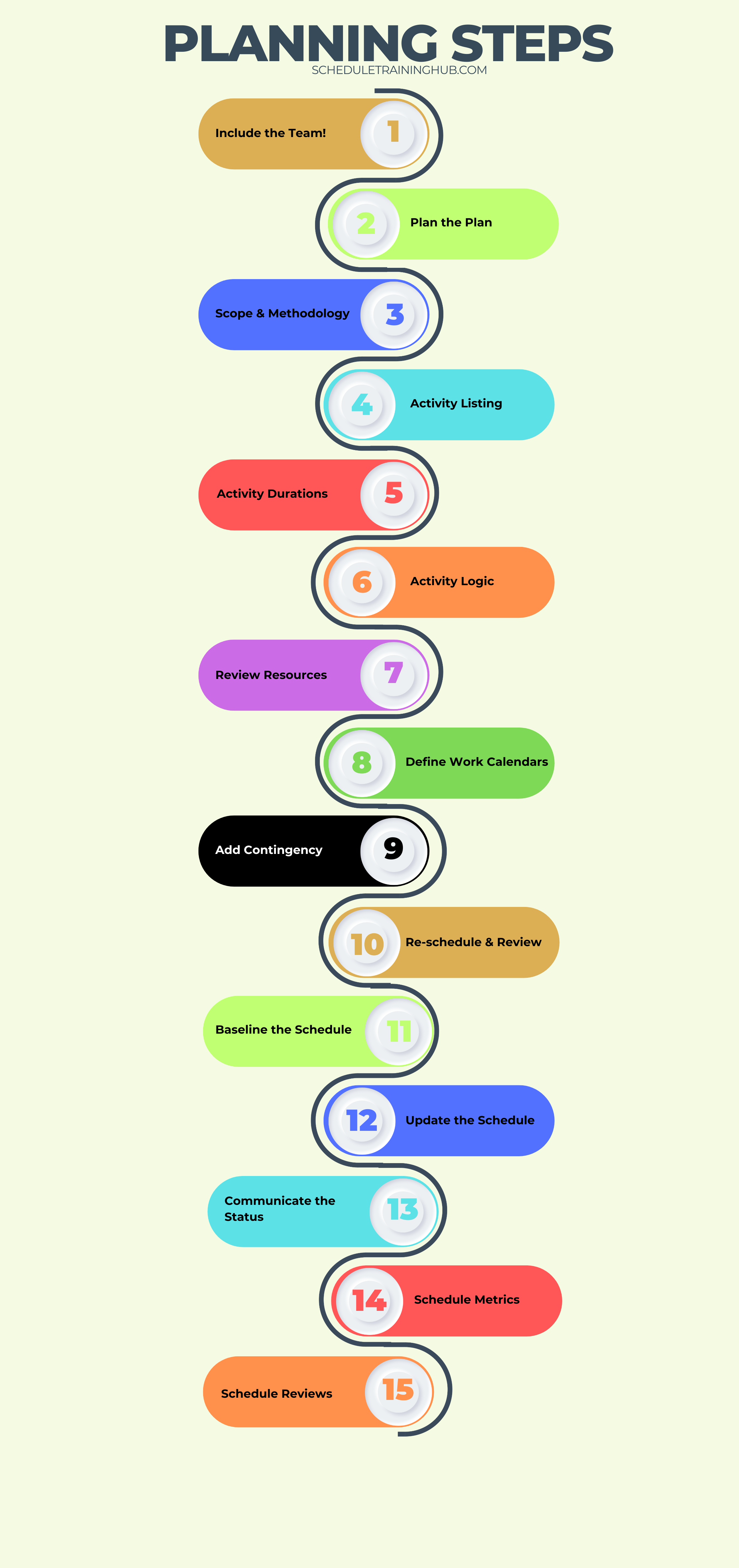
Module 1: Planning Steps Overview
A visual overview of all 15 planning steps covered in this module — from including the team through to schedule reviews.
⇩ Download Infographic
Step 0: Include the Team!
Good planning requires input and buy-in from the project team; it is not an isolated process. Getting the project team closely engaged so that they can provide accurate information and buy-in to the schedule is the most important step.
The Planner does not own the program — the program belongs to the project team and the team should be involved in updating and reporting the program's status. The Planner's role is to facilitate, coordinate, understand, interpret, and advise.
The importance of the schedule as an essential delivery tool needs to be emphasised and supported by senior management. If senior management has not bought into the need for a robust schedule that is actively used to make key project decisions, then it is unlikely the rest of the project team will.
The schedule should be reviewed by the relevant members of the project team and anyone who is involved in delivering the work as it is being developed and as it is being delivered.
Regular reviews for changes should be carried out throughout the project's life. This will help to ensure the schedule has ongoing buy-in from the people responsible for delivering the project.
The Planner needs to build trust with the team and show them how the program can be used to help them deliver successfully. Some methods that help with this include:
- Be curious, keep asking questions, and try to elicit information beyond what is being told.
- Regular communication and collaboration with the project team members responsible for delivery.
- Keep checking if the program matches their understanding of how each schedule aspect will be delivered. If any mismatches and gaps exist, these need to be re-aligned so that everyone delivers the same plan.
- Include the names or initials of project team members in a column next to the activities in the schedule they are responsible for delivering.
- Make it easy for the team to review the schedule by providing them with filtered views of the schedule showing the activities they are responsible for delivering.
- Ask team members what information they need from the schedule to help them deliver — and assure them that the schedule is there to assist them, not audit them.
- Regular face-to-face meetings with individual project team members to review and update their activities in the schedule, followed by face-to-face meetings with the project team to report and discuss schedule updates, changes, issues, and risks.
✓ Quiz — Importance of Team Involvement
Answer all questions, then check your responses against the answers in the Course Workbook.
1. Involving team members in schedule planning can:
- Increase the project manager's workload.
- Lead to a more realistic and achievable schedule.
- Decrease the need for communication during project execution.
- Solely benefit team morale.
2. Team members with expertise in specific activities can provide valuable insights on:
- Project budget allocation only.
- Estimated durations and potential risks associated with their tasks.
- The communication preferences of other team members.
- The project manager's overall planning abilities.
3. When team members feel ownership of the project schedule, they are more likely to:
- Focus on completing tasks as quickly as possible, regardless of quality.
- Be invested in meeting deadlines and achieving project goals.
- Become resistant to any changes or adjustments to the schedule.
- Question the authority of the project manager.
4. Effective communication during schedule planning should include:
- A one-way presentation of the project manager's pre-determined plan.
- Technical jargon and project management acronyms.
- Open discussions about task dependencies and potential challenges.
- Focusing solely on the positive aspects of the planned schedule.
5. Including team members in schedule planning can help to identify:
- Alternatives to the project manager's preferred communication style.
- Resource constraints or potential bottlenecks early on.
- The team member with the most negative attitude.
- Unrelated personal conflicts within the team.
Discussion Questions
6. You are the project manager for a marketing campaign launch. Several departments (creative, social media, PR) will be involved in various stages of the campaign.
- How would you approach involving team members from different departments in planning the overall project schedule?
- What specific benefits can be gained from this approach?
7. Discuss potential challenges that may arise when involving team members in schedule planning. How can a project manager overcome these challenges and ensure a successful collaborative planning process?
Multiple choice answers for Q1–5 are provided in your workbook. Use Q6 and Q7 for group discussion or self-reflection.